Friday, 6 June 2014


R E F R E N C E | 5 L I N K S

 
Abortion Law Refrom Asociation New Zelanad. N.p., n.d. Web. 6 June 2014. <http://www.alranz.org/>.

Pro Life New Zealand . N.p., 2014. Web. 6 June 2014. <http://prolife.org.nz/>.

Valenti, Jessica. The Guardian . N.p., 6 May 2014. Web. 6 June 2014. <http://www.theguardian.com/commentisfree/2014/may/06/reason-restrict-womens-options-abortion>.

Denning, Lord. Canadian Institute for Law, Theology and Public Policy - The influence of Religion on Law. N.p., n.d. Web. 6 June 2014. <http://www.ciltpp.com/cha_infl.htm>.

Raisbeck, Barbara. The Importance of Freedom of Choice. N.p., 7 Dec. 2007. Web. 6 June 2014. <http://daughtersofindia.wordpress.com/2007/12/07/the-importance-of-the-freedom-of-choice/>.


R E L I G I O N & A B O R T I O N


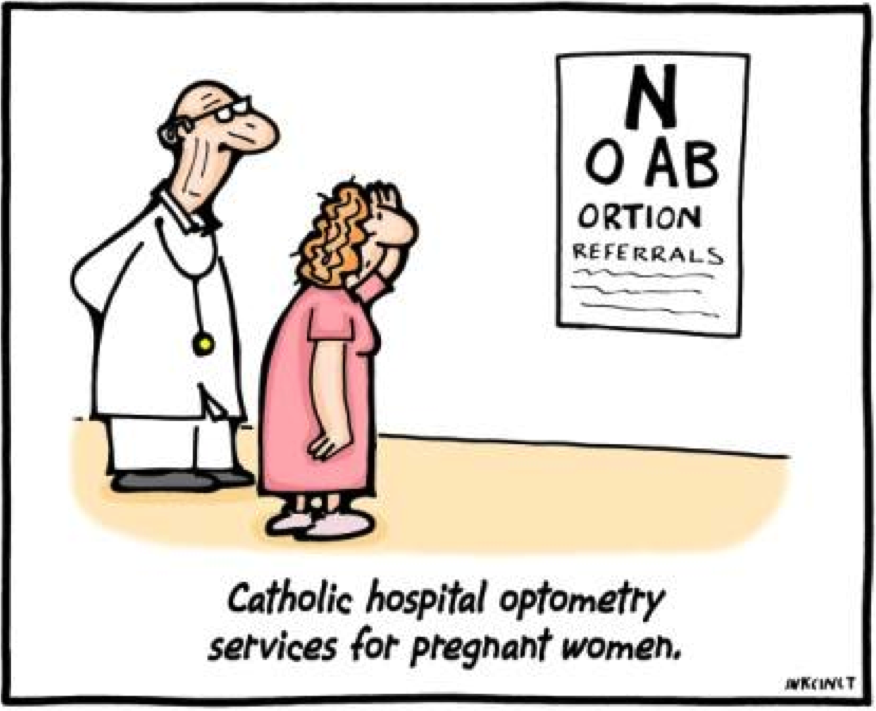
It is not foreign knowledge that religion has had a strong influence in the initial buildings of law structures amongst societies. Thus evident in the commandment “god spake these words and said, ‘I am the lord thy God: Thou shalt have none other gods but me.’” This religious commandment was once practiced as law within the early stages of developing society. And those whom did not adhere to this were condemned accordingly at the time, for example, the mid evil times and witch condemnation. Today this would be absurd. We now live in a time (and place) where we have the freedom of speech, right? In New Zealand it is clearly evident that we can openly practice our own choice of religion, which is also a representation of ‘freedom of choice’, yet the freedom of choice for our circumstantial decisions on abortion is not. The irony is that not every pro-choice advocate believes for themselves that abortion is the right thing; however they believe that you should have the opportunity to decide this yourself. It is undeniable to state that religion does not play a heavyweight position in the movement of pro-choice. Statistically looking, countries that have a strong religious population (particular to one specific religious group) for example, Iraq and Syrian Arab Republic tend rate between 0-2 on the abortion law chart, discussed in the beginning. However, New Zealand does not fall under the category of being a highly populated religious nation therefore comparatively should not be dominated by religious views.

Looking into various anti-abortion organizations online, it is evident that religion continues to play a role as one of the common denominators. As an example to this, a few pages had posted a verse or quote on their home page directly from a biblical verse, such as 40daysoflife.com. 


In conclusion, United States of America, Canada and Australia, are all comparatively similar to New Zealand, considered as more liberal and well-developed countries. Yet they differ to New Zealand because they do not impose an abortion restriction law policy, and yet, we do. It is time for us as a nation to also respect the judgment of our woman without inflicting belief systems and stop the ‘discretionary’ conditioning on such a personal decision.

F R E E D O M O F C H O I C E 


The topic of ‘abortion’ is fraught with conflict as it is inherently delicate in nature. For people who are directly involved in such a process, their experience can also be described as fraught and conflicting, to say the least. Some of the difficulties lie in the opinions of masses, coming from left, right and centre, either condoning or opposing on this issue http://prolife.org.nz/ http://www.alranz.org/ (Here are just a couple web site organizations taking a stand on the issue). What is important to acknowledge here, is that any decisions made around the abortion, are likely to be made with much consideration and hardship, given the implications associated with this process, and includes, physical, emotional and mental well-being, family and financial considerations. Applying the no-abortion restriction law in New Zealand is simply granting our woman with the trust and respect to make their own best informed choices. When New Zealand’s abortion law was initially passed in 1977, there were only 4 woman MPs in Parliament. Interestingly, all four voted against the current restrictive law on abortion. As J. Valenti (2014), a published author and a woman’s advocate summaries, “At the end of the day, women's bodily integrity must trump politics. No abortion restrictions is about fundamentally trusting women – trusting their choices, trusting them with their own bodies and trusting that they know what is best for them and their families”.


I N T R O D U C T I O N 
  

Since 1977 abortion has been ‘legalized under discretionary circumstances’ across many countries worldwide, including New Zealand. This ‘discretion’ is a set of lawful guidelines which must be satisfied before allowing a woman to proceed with termination of pregnancy. The following link outlines the accepted reasoning grounds for abortion, and it also makes reference to formal charges should this be violated www.abortion.gen.nz/legal/index.html.

According to the United Nations Abortion Policies (2011) Countries have been sectioned to fit into the categories of 0-4 in regards to their stance on Abortion laws. 0 - Abortion not allowed, 1 - In order to save a woman’s life, 2 - explicitly to save a life, 3 - explicitly to save a life and for other reasons, and 4 - Abortion allowed on request. New Zealand fits in the category number 3, along with the following countries: Saudi Arabia, Israel, United Arab Emirates and Finland to name a couple.

This issue blog will be discussing why the legalization of ‘no abortion restrictions’ should be passed through law and available to all woman in New Zealand. As abortion is a very broad, and sensitive topic in nature, this blog will not argue whether or not abortion is wright or wrong. On the contrary, the blog is about allowing people to think freely and make their own choices, rather than imposing certain beliefs on others. Two main points will be discussed throughout this blog. 1) Freedom of choice and 2) Religion should not play a role in an arena of law, especially in NZ and in the 21st Century.